Attacks
An attack is a choreographed movement toward a numbered target line.
In Saber Standard Notation, a plain target number means that the Saberist is performing an attack toward that line.
Important
An attack in the Saber Standard is not permission to strike your partner. It is a controlled movement in a shared choreography.
Basic attack notation
A plain number is an attack. The number tells the reader which target line the movement is directed toward: 1 is an attack toward target 1, 11 toward target 11, and so on.
The beginner set is 1, 11, 3, 9, 5, and 7. For what each of those lines means and where it sits on the clock face, see Targets. The full twelve-line reference is in the Notation Legend.
Attack versus target
The target is the line.
The attack is the action moving toward that line.
| Concept | Meaning |
|---|---|
| Target | The numbered line being used |
| Attack | The choreographed movement toward that line |
Example:
3 means the Saberist attacks target line 3.
Attack and parry relationship
Most beginner attacks have a matching parry.
| Attack | Matching parry |
|---|---|
1 |
1P |
11 |
11P |
3 |
3P |
9 |
9P |
5 |
5P |
7 |
7P |
The attack gives the line. The parry receives or answers that line.
Attacks in a two-Saberist table
In a Saber Standard table, the attack appears in the step column for the Saberist performing it.
| Player | Step 1 | Step 2 | Step 3 |
|---|---|---|---|
| Saberist A | 1 | 11 | 3 |
| Saberist B | 1P | 11P | 3P |
Read this vertically:
- Step 1: Saberist A attacks
1; Saberist B parries1P. - Step 2: Saberist A attacks
11; Saberist B parries11P. - Step 3: Saberist A attacks
3; Saberist B parries3P.
Common beginner mistakes
| Mistake | Correction |
|---|---|
| Swinging too hard | Slow down and make the line readable |
| Aiming at the body | Aim toward the choreographed line, not the person |
| Changing the line mid-swing | Follow the written target |
| Moving before the partner is ready | Reset and confirm both Saberists understand the step |
| Treating notation like sparring | Keep it choreographed and repeatable |
Teaching note
When teaching attacks, do not start with speed. Start with shape.
A good beginner attack should answer three questions clearly:
- What target line is being used?
- Can the partner read it?
- Can both Saberists repeat it safely?
If the answer is no, the attack is not ready to speed up.
Attack diagrams
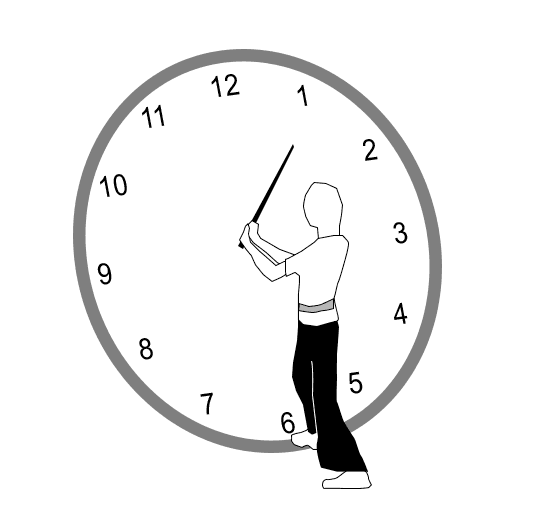 Attack 1 |
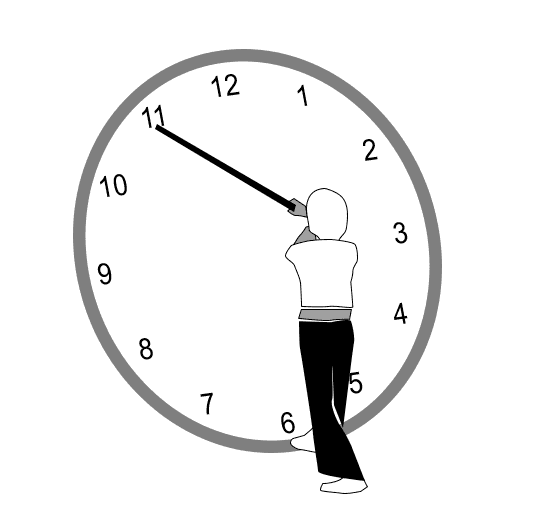 Attack 11 |
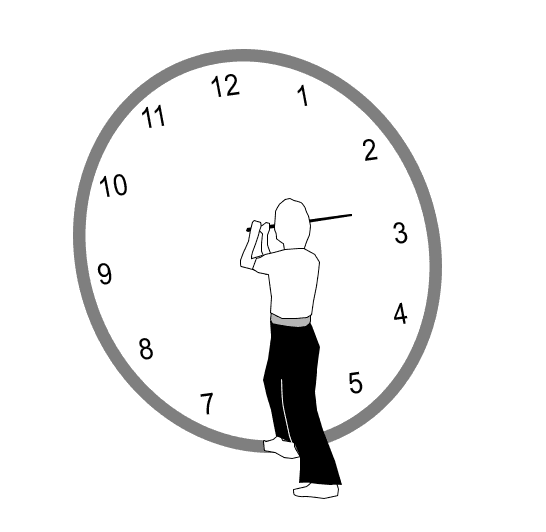 Attack 3 |
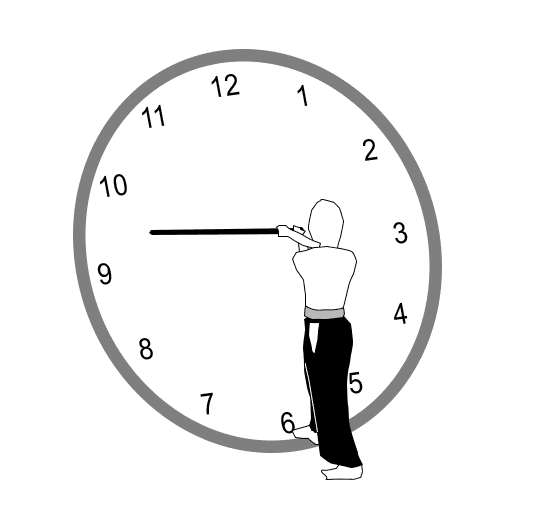 Attack 9 |
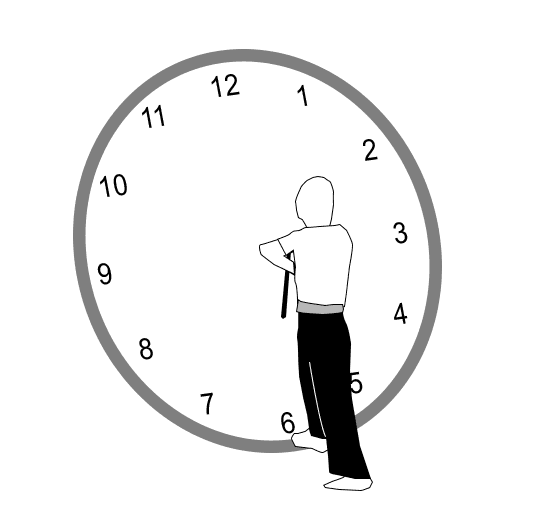 Attack 5 |
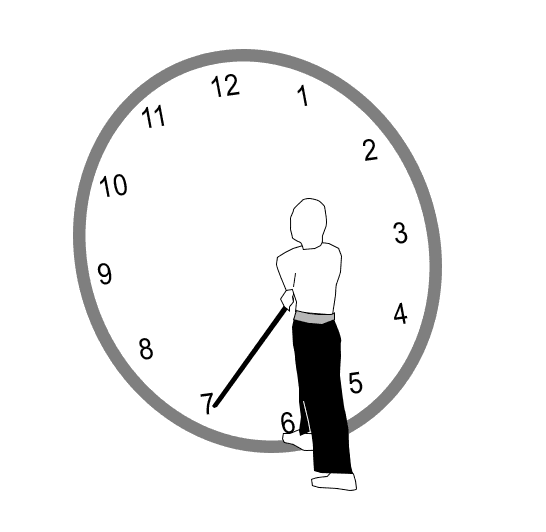 Attack 7 |